

The Science Behind Camelina Oil
We summarize peer-reviewed research clearly and honestly. No exaggerated claims — just what the studies actually found.
Important Disclaimer
Important: The research summaries on this page are for educational purposes only. They describe findings from independent peer-reviewed studies and do not constitute medical advice. Something Good Local does not claim that our oil diagnoses, treats, cures, or prevents any disease or health condition. Always consult your healthcare provider before making dietary changes.
What the Research Shows
Based on peer-reviewed studies including Zubr (2009), Royal Veterinary and Agricultural University, Denmark.
38%
Omega-3 (ALA) content — among the highest of any culinary plant oil
12.2%
Reduction in LDL cholesterol in a 6-week clinical trial with volunteers
1,008 ug/g
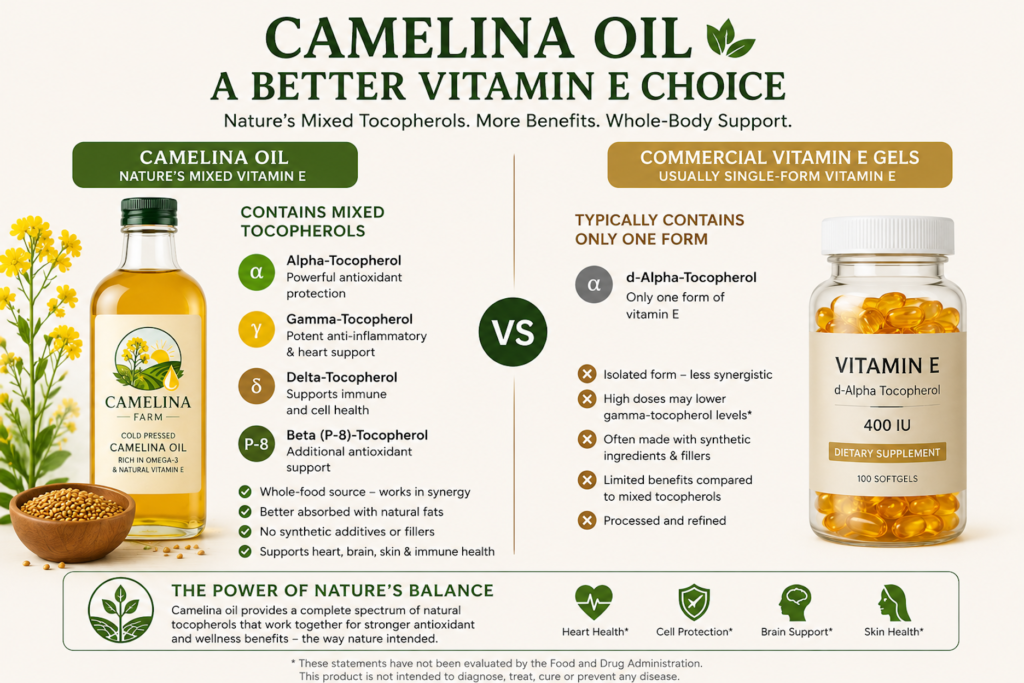
The mixed natural tocopherols is about 806-1008 ug/g. Vitamin E content is higher than vegetable oil, sunflower, rapeseed, and flaxseed oils
1 : 2
Omega-3 to Omega-6 ratio — far closer to the ideal 1:1 than most Western diets achieve
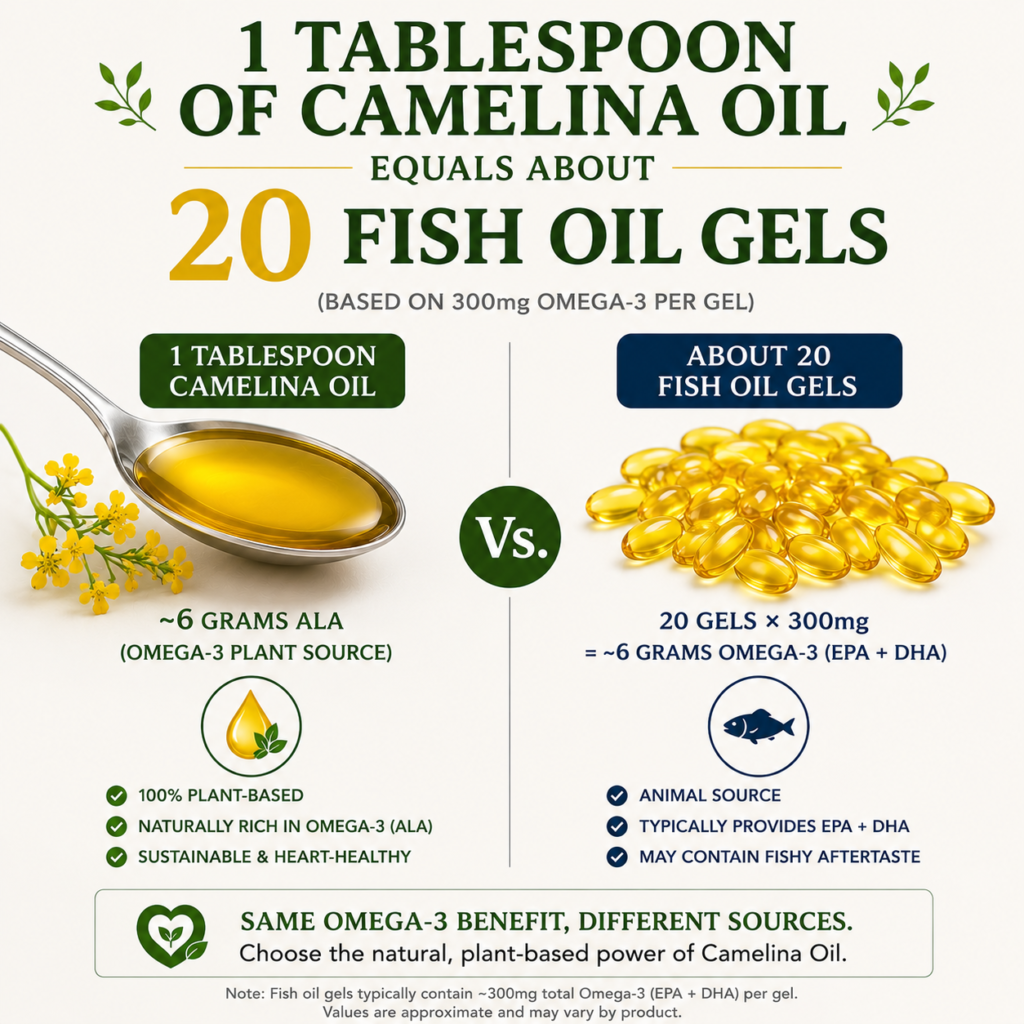
Study 1 — Fatty Acid and Tocopherol Content of Camelina Oil
Zubr, J. (2009). Camelina oil in human nutrition. AgroFood Industry Hi-Tech, Vol. 20(4). Royal Veterinary and Agricultural University, Denmark.
This foundational study analyzed the nutritional profile of camelina oil from both winter and summer crop varieties. Key findings included:
- Alpha-linolenic acid (ALA, omega-3) content ranging from 36.8 to 40.8% of total fatty acids — one of the richest plant-based omega-3 sources available.
- Linoleic acid (omega-6) content of 12.4 to 15.3% — creating a favorable omega-3 to omega-6 ratio.
- Total tocopherol (Vitamin E) content of 806–1,008 ug/g — significantly higher than in common vegetable oils including sunflower, rapeseed, and flaxseed oils.
The study concluded that camelina oil’s unique fatty acid profile makes it a nutritionally valuable dietary supplement, particularly for populations with low omega-3 intake.
Study 2 — Cholesterol Reducing Effect of Camelina Oil
Karvonen et al., (2002). Metabolism, 51(10), pp. 1253-1260.
A clinical trial was conducted with mildly hypercholesterolemic volunteers aged 25–75 years (14 males and 31 females). Participants consumed camelina oil daily over 6 weeks while maintaining their regular diet — only replacing their usual fats (butter, margarine, oil) with camelina oil.
Key findings:
- Total cholesterol reduced from 5.9 to 5.6 mmol/L over the 6-week period.
- LDL (low density lipoprotein) cholesterol decreased by 12.2%.
- The cholesterol-reducing effect was attributed to the oil’s high ALA and tocopherol content, along with naturally occurring phytosterols.
Research suggests that the regular dietary inclusion of camelina oil may support healthy cholesterol levels as part of a balanced diet.
Study 3 — Camelina Oil and Dietary ALA Supplementation
Zubr, J. (2009). Dietary supplementation findings. AgroFood Industry Hi-Tech, Vol. 20(4); Karvonen et al., (2002). Metabolism, 51(10), pp. 1253-1260
The study investigated the role of ALA supplementation in modern diets, where omega-3 intake is typically well below recommended levels. Key findings included:
- The average dietary ALA intake in Europe, USA, and Canada is estimated at just 0.8–2.2 g per day — well below optimal levels.
- A daily intake of approximately 33ml of camelina oil provides meaningful ALA supplementation.
- ALA from camelina oil was found to be a substrate for conversion to EPA (eicosapentaenoic acid) — an important long-chain omega-3 fatty acid.
- The study noted particular promise for children, where dietary ALA supports healthy neurological development and growth.
Camelina oil’s ALA content makes it a practical, plant-based way to improve the omega-3 to omega-6 ratio in everyday diets.
How Camelina Oil Compares
Omega-3 (ALA) content comparison across common culinary oils — based on published research.
| Oil | Omega-3 (ALA) | Omega-6 (LA) | Vitamin E |
| Camelina Oil | 36–40% | 12–15% | Very High |
| Flaxseed Oil | 50–60% | 15–18% | Low |
| Olive Oil | 1% | 10% | Medium |
| Canola Oil | 9–11% | 19–21% | Medium |
| Sunflower Oil | Less than 1% | 65–70% | High |
Note: Values are approximate ranges based on published nutritional research. Individual products may vary based on crop variety and growing conditions.
Curious to Try It?
Myth and Quiz
Click the arrow to expand the contents.
Q1: People are saying seed oil is bad for your health. TURE or FALSE?
A: FALSE.
Key: Not all seed oil is created equal.
Q2: Seeds oils causes chronic body inflammation. TRUE or FALSE?
A: FASLE.
Key: The content of the oil, the ways, and amount of consumption is the key.
Q3: Omega-6 is bad and it causes inflammation. TRUE or FALSE?
A: FASLE.
Key: Omega-6, as one of the nature polyunsaturated fats (PUFAs), is an essential PUFA needed for your body. But the unbalanced FAs intake is the problem.
Q4: Emphasizing the intake of Omega-3 is needed in our modern society. TRUE or FALSE?
A: TRUE.
Key: Current diet contains too much of Omega-6 content and the PUFAs are out of balance, that is the problem.
Q5: I consume a lot of Olive oil, then that should take care of my needs for omega fatty acids. TRUE or FALSE?
A: FASLE.
Key: The two true “essential” fatty acids that your body cannot produce on its own and must be obtained from your diet are Omega-3 and -6. Olive oil is very rich in Omega-9, but your body can synthesize it. The health benefit from Olive Oil is most likely due to reduced omega-6 intake and its potent antioxidants.